When a starter or alternator comes off a car in Forest City, most drivers picture it going in a bin and a shiny replacement coming out of a box. At a rebuilding shop, the picture is different. The unit goes on a bench, comes apart piece by piece, and gets renewed: worn parts replaced, sound parts cleaned and tested, and the whole assembly proven on test equipment before it ever turns an engine again. For a first-timer handing over a failed unit, the process is worth understanding, because what a rebuild actually renews is the difference between a quality job and a cleaned-up gamble.
Starters and alternators are ideal rebuild candidates, and that is no accident. They are bolted-on electrical machines with defined wear parts, and their cast housings and armatures, the expensive bones of the unit, usually survive long after the wear parts give out.
Step by step: what happens to your unit
- Testing before teardown. A failed unit gets tested as it arrived, and so does the complaint. Some units test fine and point the diagnosis back at a battery, cable, or connection instead, which saves everyone a rebuild nobody needed.
- Complete disassembly. The unit comes fully apart: end frames, armature or rotor, field components, drive gear on a starter, pulley and bearings on an alternator. Nothing gets judged from the outside.
- Cleaning and inspection. Parts are cleaned so wear can be seen and measured. Housings are checked for cracks, shafts for scoring, windings for heat damage and insulation breakdown.
- Wear parts replaced as a set. Brushes, bearings or bushings, and the starter's solenoid contacts or the alternator's regulator and rectifier components are renewed based on test and inspection, not kept because they almost pass.
- The rotating core serviced. The starter's commutator or the alternator's slip rings are machined true or cleaned to specification, windings are tested for shorts and grounds, and the starter drive, the part that engages the flywheel, is renewed if its one-way clutch slips.
- Reassembly with correct tolerances. End play, brush spring tension, and bearing preload are set to specification. This is the quiet step that separates a rebuild from a parts swap in a housing.
- Bench testing under load. The finished starter is load-tested for draw and cranking performance; the alternator is run and tested for output across speeds, voltage regulation, and diode health. A unit that cannot pass on the bench does not leave the bench.
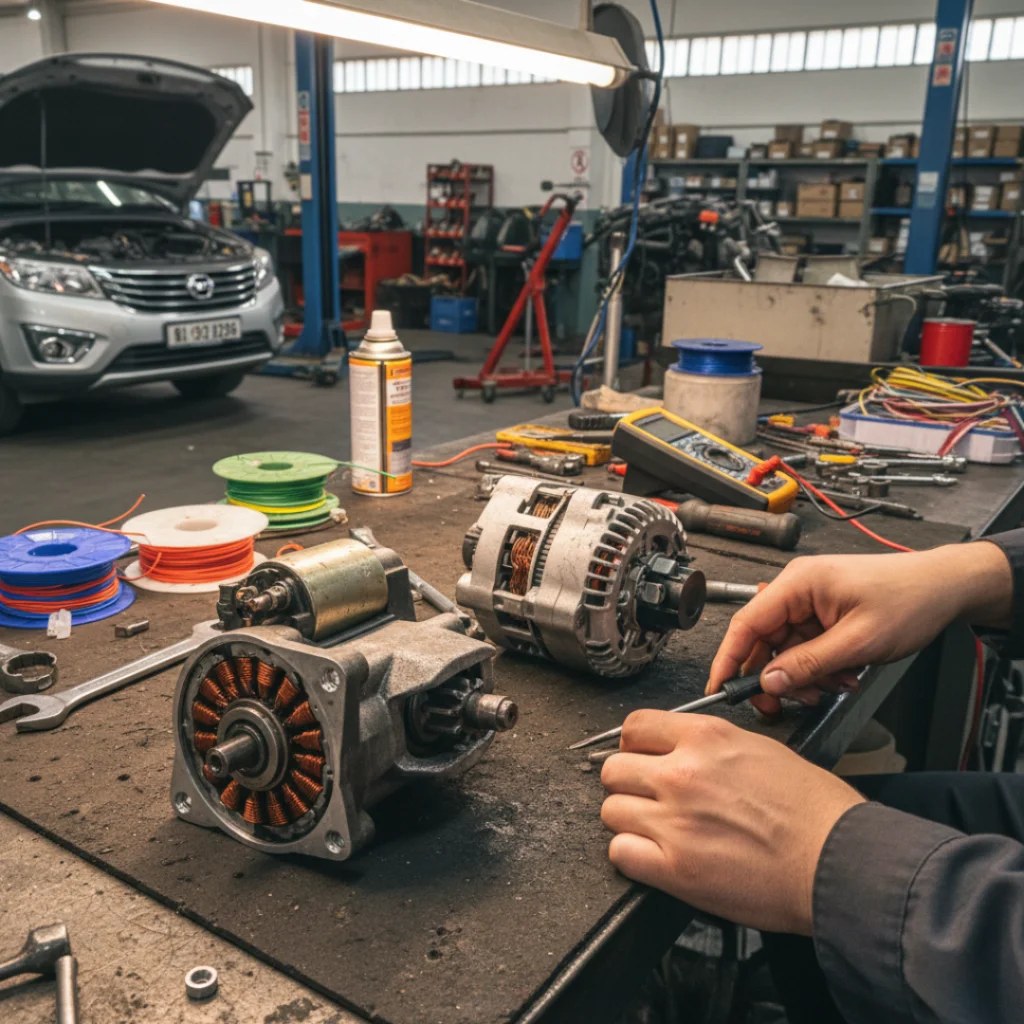
The parts that actually wear out
Brushes are the headline wear item in both machines. They are carbon blocks that carry current to the spinning part, and they erode by design, a fraction with every start and every mile. When brushes wear short, contact gets intermittent: the starter that clicks or works after a tap, the alternator whose output fades. Bearings and bushings wear next, announcing themselves as noise. In alternators, the rectifier diodes and voltage regulator are the electronic wear points, and heat is their enemy; a failed diode can leave the alternator charging weakly and putting an alternating ripple into the system that confuses modern electronics. In starters, the solenoid's heavy contacts pit and burn from arcing at every start, until one morning they pass no current at all.
Notice what is not on the wear list: the housings, the armature windings in most cases, the steel of the machine. Those are what you keep when you rebuild, and they are most of the unit.
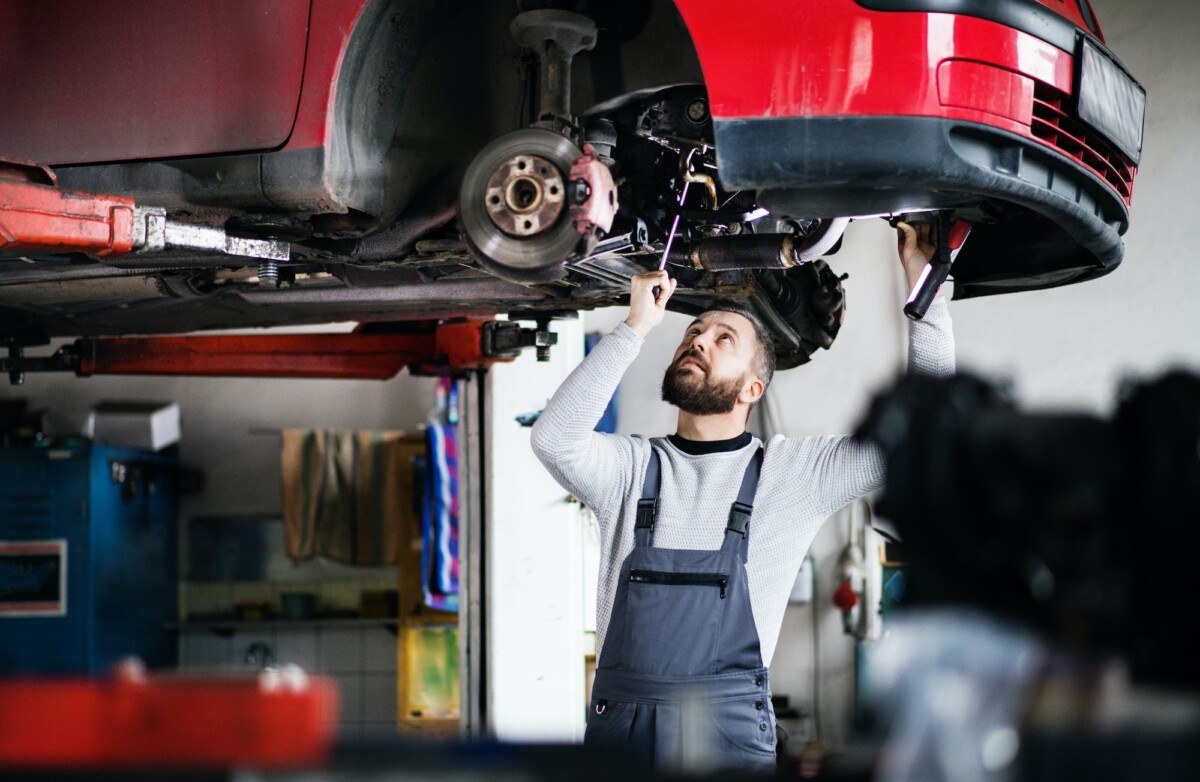
Rebuilt, remanufactured, and new: placing the bench work
A local rebuild renews your specific unit, which has one quiet advantage: it is the unit that already fits your vehicle, its brackets, and its wiring, because it came off it. Factory remanufactured units go through a similar renewal at scale and are a sound option too. The option to be wary of is the bargain unit built to a price, where cleaning substitutes for parts replacement and bench testing is a spin and a shrug. Asking what a rebuild includes, brushes, bearings, regulator, drive, and whether the finished unit is load-tested, separates the categories faster than any label. A shop like Forest City Starter can walk your own unit's test results, which is a conversation a boxed part cannot have with you.
Common questions
How long does a rebuild take?
A straightforward starter or alternator rebuild is often same-day or next-day work once the unit is on the bench, depending on parts. Unusual or older units can take longer if components must be sourced.
Is a rebuilt unit as reliable as a new one?
A properly rebuilt unit, with wear parts renewed and load testing passed, gives service comparable to new for these machines, because the parts that age are the parts that were replaced. The bench test is the evidence to ask about.
Why did my unit fail again after a cheap replacement?
Common causes are wear parts that were cleaned rather than replaced, and an unresolved vehicle-side problem, a weak battery overworking an alternator, or corroded cables overworking a starter. The vehicle side should be tested with any repeat failure.
Photos in this guide are representative stock images.
← All guides from Forest City Starter← Back to Forest City Starter