The pattern is maddening and familiar around Forest City: the car starts fine all week, then one morning, dead. Not slow, not reluctant. Dead, after sitting overnight with nothing left on that anyone can find. The battery gets replaced, because it is the usual suspect and the easiest to reach, and a week later the new battery is dead too. That second death is the diagnosis the first one skipped. Something in the car is drinking current while it sits, a parasitic draw, and a healthy battery is just a bigger meal for it.
The good news is that this fault can be hunted methodically, and part of the hunt is driveway work. The rest needs a meter, patience, and knowing the normal numbers. Here is where the line falls.
What normal looks like
A parked modern car is never fully off. The clock, the radio memory, keyless entry receivers, and security systems all sip current, and the computers take time, often 20 to 45 minutes after shutdown, to go fully to sleep. Once asleep, a typical vehicle draws somewhere in the range of 20 to 50 milliamps, a small enough sip that a healthy battery holds a charge for weeks. A draw of several hundred milliamps is a thief: it can pull a battery below starting strength in a night or two. The number is the diagnosis. Guessing which module is awake is not.
Age matters to the math. A battery that has lost capacity to age or heat may still start the car daily, because the alternator refills it every drive, while lacking the reserve to survive even a borderline draw overnight. Sometimes the draw is the fault. Sometimes the battery is. Sometimes a modest draw meets a tired battery and both get replaced in the end, which is why testing beats swapping.
The how-to: what you can check yourself
- Rule out the honest mistakes. Check for a dome or cargo light switched on, a glove box light with a failed switch, a phone charger or dash camera in a live outlet, and a rear hatch or door not fully latched, which can keep modules awake all night.
- Note the pattern. Dead after one night, or only after a weekend sit? A car that dies only after two or three days has a smaller draw or a weaker battery than one that dies by morning. The pattern sizes the problem.
- Charge and test the battery first. A draw test on a discharged, untested battery wastes everyone's time. The battery must be fully charged and load-tested so the hunt starts from a known-good foundation.
- Watch for things that wake the car. Clicking relays hours after shutdown, a pump or fan that cycles, a dash display that lights on its own, or a trunk light visible through the seat pass-through are all field evidence worth reporting.
- Do not start pulling fuses at random yet. On modern cars, opening a door or waking a module restarts the sleep timer and ruins a measurement in progress. Fuse-pulling is the shop stage, done after the car is asleep and instrumented, in a set order.
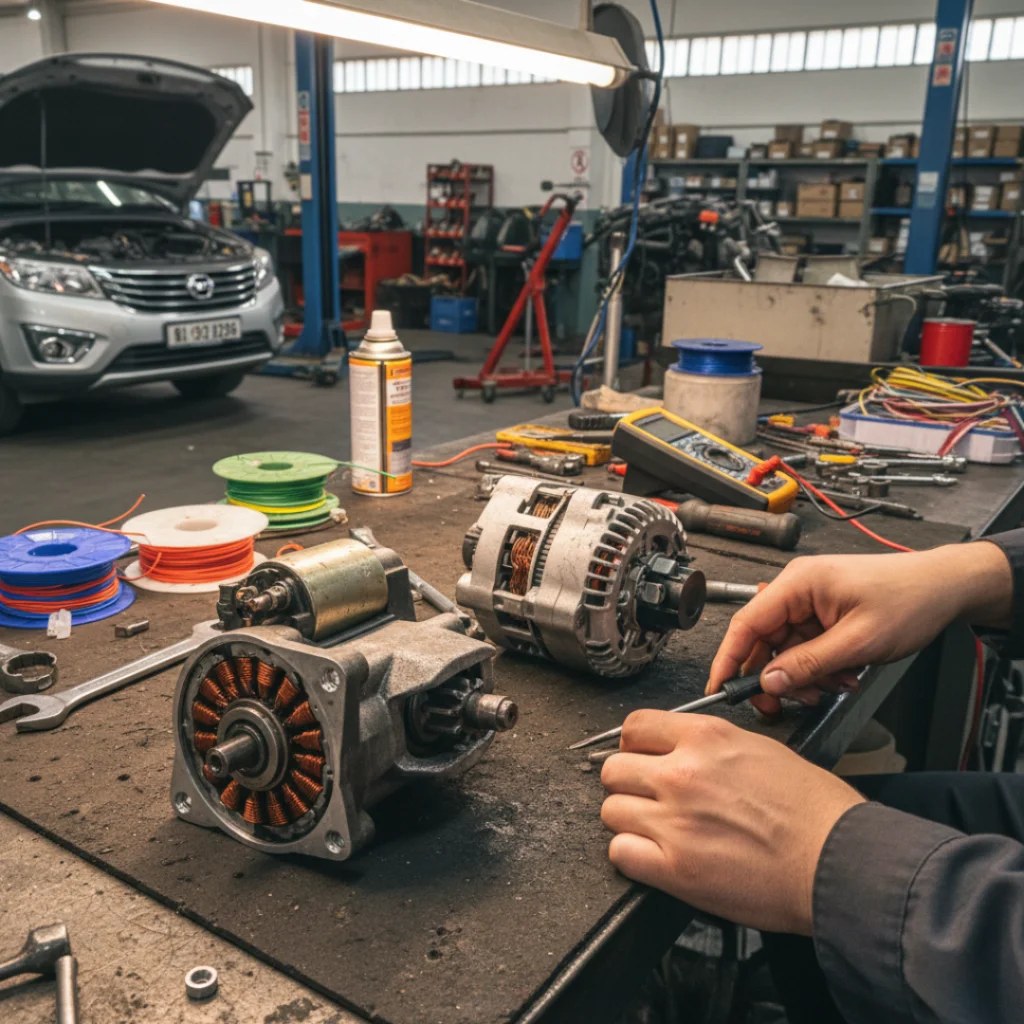
The shop stage: measuring sleep
The professional method is patient by design. A meter is connected in series with the battery, or a low-current clamp is placed on the cable, and then everyone waits. The car must reach full sleep before any reading means anything, and rushing this step is the most common reason draw hunts fail. Once asleep, if the draw is high, fuses are pulled one at a time, or voltage drop is measured across each fuse, to find the circuit that is awake. That circuit's diagram then lists the suspects: a module, a switch, a motor, a light.
The usual suspects, once circuits are named, are unglamorous. A glove box or trunk light that never turns off. A stuck relay keeping a circuit live. A door module that never sleeps because a latch switch lies to it. An aftermarket accessory wired to constant power. A alternator with a failed diode leaking current backward while parked, which is the suspect that brings draw cases to a shop like Forest City Starter, because it hides inside a charging system that tests as charging.

What not to do while you wait for the appointment
Disconnecting the battery every night protects the battery but erases computer memory and, on some cars, creates new relearn problems, and it guarantees the fault will not be found because the evidence resets. Jump-starting daily and driving on is worse: deep discharges shorten the new battery's life rapidly, and a battery repeatedly drained and recharged can be ruined in a season of mornings. A battery maintainer is the sane bridge if the car must sit: it feeds the draw and keeps the battery full without hiding the fault from a later test, as long as you tell the shop it was used.
Common questions
How long should a healthy car be able to sit?
Weeks, for most modern vehicles in good health. A car that cannot sit a long weekend without dying has a draw, a weak battery, or both, and the combination is testable.
Can a bad alternator drain a battery overnight?
Yes. A shorted diode in the alternator can leak current from the battery while the car is parked, even though the alternator charges normally when driving. It is one of the classic hidden draws.
Why did replacing the battery fix it for a week?
A fresh battery has more reserve, so the same draw takes longer to pull it down. The draw was untouched, and the new battery was being damaged by deep discharge the whole time it seemed fixed.
Photos in this guide are representative stock images.
← All guides from Forest City Starter← Back to Forest City Starter